
Google Ads
Google Ads Clicker: How Google Ads Counts, Filters and Bills Clicks
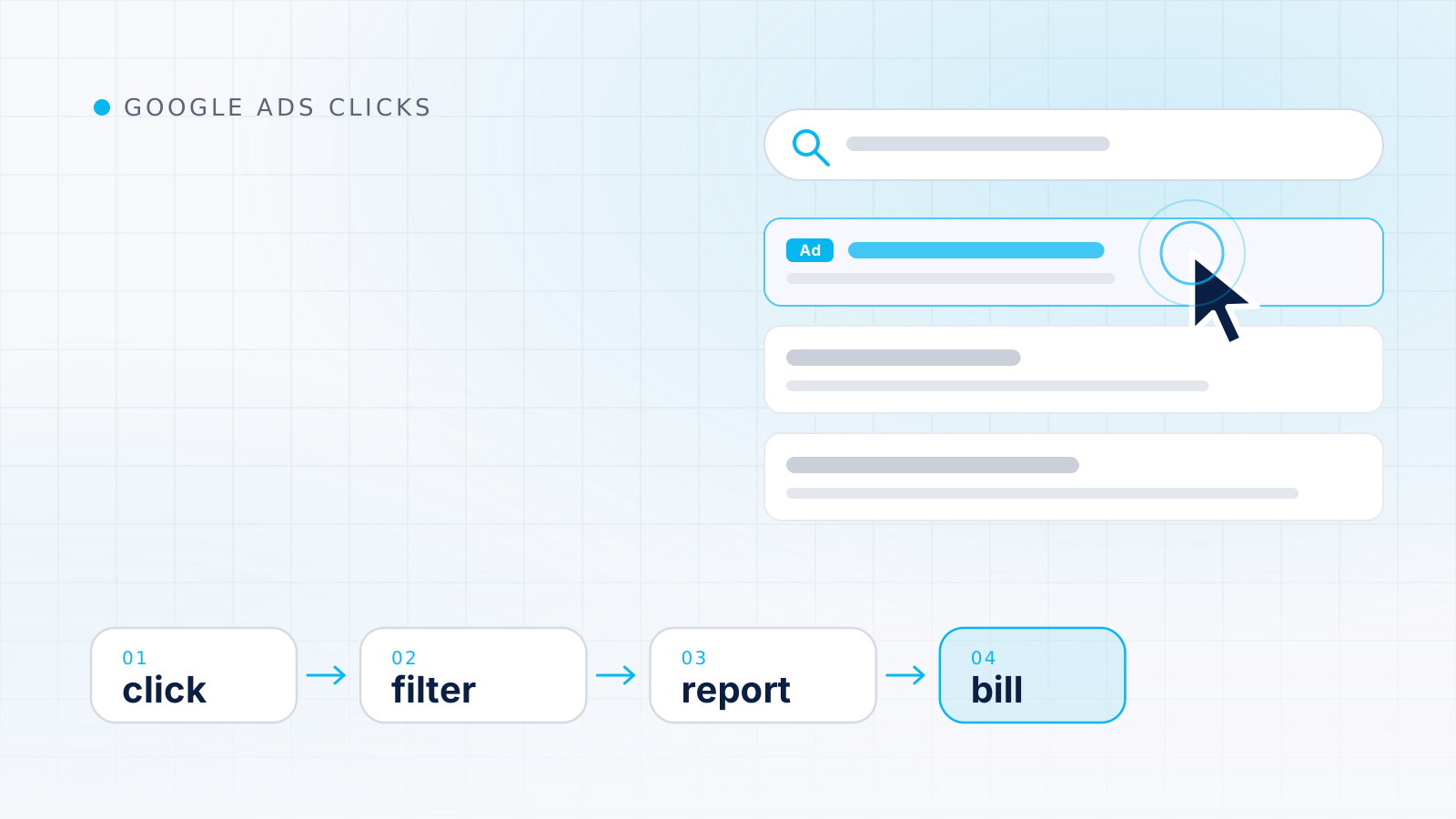
The phrase covers everything from click bots to worried advertisers. Here is how a click is really recorded, filtered and charged, and how to audit your own traffic.
The phrase can mean a click bot, a paid clicker, a protest extension or a simple click counter. Here is what each sense means and how ad platforms treat those clicks.
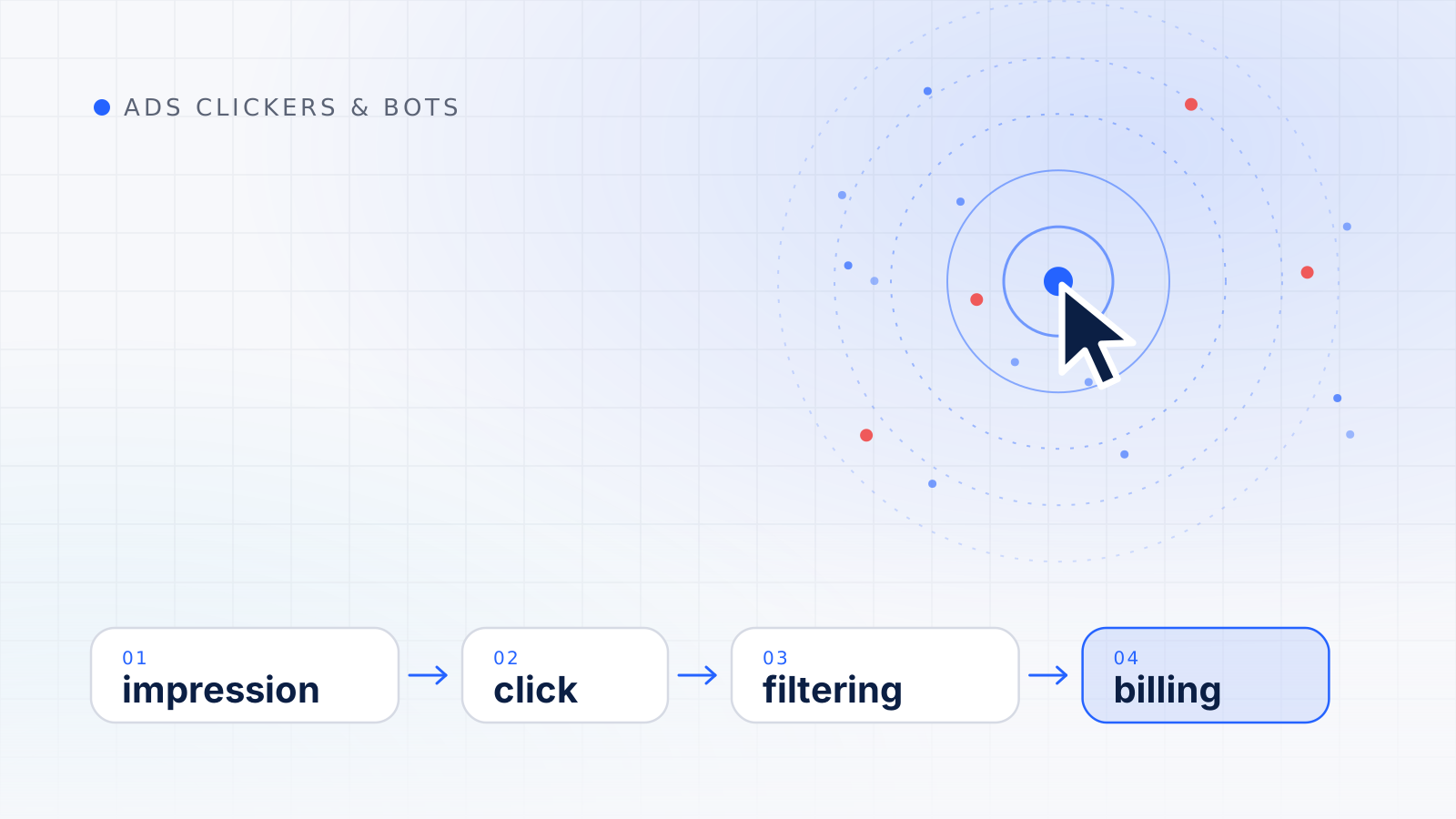
An ads clicker is a person, a program or a browser add-on that clicks online ads, usually without any genuine interest in what is being advertised. The term is informal, so the answer to “what is an ads clicker?” depends on who is asking: it can describe a click bot, someone paid to click, a click farm, a protest extension or, more loosely, a tool that simply counts clicks.
That ambiguity matters because the different meanings lead to very different outcomes. A tool that counts clicks is ordinary measurement. Software or people that click ads to drain a competitor’s budget or inflate a publisher’s earnings are breaking platform rules, and the clicks they produce are exactly what ad platforms try to filter out before anyone pays for them.
This guide explains each sense of the term, separates genuine from invalid ad interactions, shows at a high level how pay-per-click measurement works and why clicks matter to budgets and automated bidding, summarizes the relevant Google policies for both advertisers and publishers, and corrects the most common misunderstandings. A glossary of related Google Ads concepts closes the article.
You will not find “ads clicker” defined in Google’s advertising documentation. Google talks instead about invalid traffic, which it describes as traffic that doesn’t represent genuine interest in your business. Most things people call an ads clicker produce that kind of traffic, but the phrase itself bundles together several unrelated ideas, from fraud to plain bookkeeping.
Three questions help pin down what someone actually means:
These questions also explain why search results for the phrase are such a mix of software listings, fraud warnings and analytics tutorials. People arrive with different problems, and the same two words cover all of them.
The most common meaning is a program that clicks ads automatically, often while trying to pass as a real visitor. This is usually called a click bot, and our guide to how ads clicker bots work and why they get caught covers the concept in depth. Google’s first example of invalid traffic is non-human traffic, which it describes as clicks and impressions generated by bots and automated software to mimic how humans browse.
Click bots are a website problem as well as an advertising one, because automated visits also pollute analytics. If you suspect bots are reaching your pages, spotting non-human sessions in analytics and server logs is the place to start.
Sometimes the clicker is a human being. Google’s examples of invalid user activity include competitors who manually click to increase your spend and publishers who pay users to click ads. A person clicking by hand can look more natural than a crude script, but the defining feature is the same: the click is not driven by interest in the product or service.
A click farm scales the paid-human model up. Many people, often working across many devices, are directed to click or view ads, install apps or interact with content to order. Because the activity is human but organized and paid for, it belongs in the same family as individual paid clicking. The scale simply multiplies the cost for whoever ends up paying for the clicks.
Some browser extensions were built as a protest against behavioral advertising. Instead of only hiding ads, they click on them quietly in the background, with the idea of polluting the interest profiles that ad networks build and making advertising data less trustworthy. The people who install them do so deliberately, but each click is generated by software rather than by interest in the ad. From an advertiser’s side, those clicks look like any other automated activity.
Finally, “ads clicker” is sometimes used loosely for anything that counts or tracks ad clicks: the Clicks column in an ad account, a link tracker or a reporting dashboard. In this sense the clicker does not click anything; it records clicks that other people make. If that is what you are looking for, our explainer on how Google Ads counts, filters and bills clicks is a better starting point.
Not all automation around ads is malicious, either. Ad-quality crawlers, link-preview fetchers and verification tools visit pages every day for legitimate reasons, and our map of automated ad traffic separates those from harmful automation.
| Context | Who or what clicks | Typical aim | Relation to invalid traffic |
|---|---|---|---|
| Click bot software | An automated program | Drain a budget, inflate earnings or metrics | Matches Google’s non-human traffic example |
| Paid individual clickers | Real people | The same aims, done by hand | Matches Google’s examples of invalid user activity |
| Click farms | Organized groups of people and devices | The same aims, at scale | Same as paid clicking, with coordination |
| Protest extensions | A browser add-on | Disrupt ad tracking and profiling | Software-generated clicks with no interest in the ad |
| Click counters | Nobody; it records clicks | Measurement | None; it measures rather than clicks |
It helps to separate the act of clicking from the reason behind it. On a healthy campaign, most clicks should belong in the first row of the table below. The other rows are where “ads clicker” problems live.
| Interaction | Illustrative example | Genuine interest? | How Google classifies it |
|---|---|---|---|
| Genuine | A searcher clicks an ad that matches what they want | Yes | Valid, counted and billed |
| Accidental | A thumb hits an ad placed next to a navigation button | No | Invalid traffic |
| Manual invalid | A competitor or paid clicker clicks without intending to buy | No | Invalid traffic |
| Automated invalid | A script clicks while posing as a visitor | No | Invalid traffic |
Google’s list of examples explicitly includes accidental clicks caused by poor ad placement, such as ads placed too close to navigation buttons, alongside deliberate manual and automated clicking. Accidental clicks are a particular issue on small touch screens, and our guide to mobile ad traffic quality looks at that problem separately.
Two cautions keep this table honest. First, “genuine” does not mean “profitable”: plenty of real people click, read, compare and leave without buying. Second, the categories describe intent, not billing. Whether an advertiser ends up paying for an invalid click depends on whether it is detected, which is covered below.
In Google Ads, a click is counted when someone clicks your ad, such as the headline or phone number of a text ad. The same page notes that a click is counted even if the person never reaches your website, for example because the site is temporarily unavailable. That is one of several reasons why ad clicks and website sessions rarely match exactly.
Each search triggers an auction that decides whether an ad appears and where. Google uses Ad Rank, which is calculated every time someone searches and is based on your bid, the quality of your ads and landing page, Ad Rank thresholds, the competitiveness of the auction, the context of the search and the expected impact of ad assets. In a pay-per-click campaign the advertiser is charged when the ad is clicked, and the price varies from auction to auction.
Across many clicks, Google reports average cost-per-click, calculated by dividing the total cost of your clicks by the total number of clicks. Averages hide a lot of variation between devices, hours and keywords, and our guide to measuring cost per click correctly explains how to read them without being misled.
Because spend accrues click by click, every billed click uses budget that could have paid for a different visit. As a purely hypothetical illustration, imagine a campaign with an average CPC of $2. If 100 non-genuine clicks were billed, that would represent $200 of spend with no prospect of a sale. Real figures vary enormously; the point is that an invalid click is a direct cost only if it reaches billing, which is why detection and credits matter so much.
Many advertisers now let Google set bids for them. Smart Bidding refers to bid strategies that use Google AI to optimize for conversions or conversion value in each auction, and it requires conversion tracking. Strategies like these learn from what happens after the click, so the quality of the data matters. If junk clicks lead to fake form submissions that are counted as conversions, the system is being fed misleading examples of success.
Google says it removes invalid traffic it detects before the end of the month, including impressions, clicks, interactions and conversions, from billing and campaign reports. It also points out that its filters run after an ad serves, so they cannot stop invalid traffic from reaching your website and lead forms, and it recommends safeguards such as reCAPTCHA and server-side validation for those forms.
According to Google, its ad traffic quality team uses automated filters, machine learning and manual reviews, and often detects invalid traffic as it happens or shortly after. The same help page describes how that protection reaches advertisers:
These protections are substantial, but no filtering system catches everything immediately, and some patterns are only recognized when traffic is analyzed over a longer period. For the reporting columns, the credit process and how to prepare an investigation request, see our guide to Google Ads invalid clicks and credits.
Ads clickers do not only target advertisers. A publisher who shows Google ads through AdSense earns money when those ads are clicked, which creates an obvious temptation. The policy leaves no room for interpretation: publishers may not click their own ads or use any means to inflate impressions and/or clicks artificially, including manual methods.
The same policy page goes further:
In other words, an ads clicker pointed at your own site is one of the fastest ways to lose the very revenue it was meant to increase.
This belief sits behind many searches for an ads clicker, and it is largely mistaken. Google names competitors who manually click to increase your spend as an example of invalid traffic. When it identifies such an interaction as invalid before the end of the month, Google says it restores those costs to the campaign budget, and invalid traffic found later is credited where appropriate and possible. Some invalid clicks can go undetected for a while, which is why advertisers monitor their accounts, but deliberately clicking a rival’s ads is both against the rules and far less effective than people assume. Our article on click fraud on Google Ads covers motives, reporting and realistic expectations.
Neither belief survives scrutiny. On organic results, Google’s help center answers the question directly: running online ads has no impact on where your website appears in organic search results. On paid results, ad position comes from Ad Rank, and Quality Score is a diagnostic tool that is not an input in the ad auction, so even a higher score would not lift an ad by itself. Google also says that the invalid clicks it catches are removed from campaign metrics such as Clicks and Cost, which makes manufactured clicks an unreliable way to move any number and a clear policy risk.
Most non-converting clicks are perfectly ordinary. People compare prices, check opening hours, click by mistake and back out, or land on a page that does not answer their question. A low conversion rate is far more often a sign of targeting, offer or landing-page problems than of an ads clicker at work. Treat suspected fraud as a hypothesis to test against evidence, not as the default explanation for disappointing results.
Human invalid activity counts too. Accidental clicks, paid clickers and competitors clicking by hand all appear in Google’s examples of invalid traffic. Focusing only on bots can lead you to overlook placement problems, especially on mobile, that are generating clicks nobody intended.
| Term | Plain-language meaning | Why it matters for this topic |
|---|---|---|
| Impression | One showing of an ad | The base for CTR; Google lists invalid impressions meant to artificially lower an advertiser’s CTR as invalid traffic |
| Click | An interaction with an ad’s clickable parts, such as the headline or phone number (Google’s definition) | The unit that is billed in pay-per-click campaigns |
| Clickthrough rate (CTR) | How often people who see an ad end up clicking it (explained on the same page) | A sudden jump without a matching change in impressions or settings is worth investigating |
| Cost per click (CPC) | Average CPC is total click cost divided by the number of clicks (Google’s definition) | Shows what clicks cost on average, which invalid clicks can distort if they are billed |
| Invalid clicks | Clicks that do not represent genuine interest, whether accidental, manual or automated (Google’s overview) | Removed from billing when detected, or credited later |
| Ad Rank | The set of values that decides whether and where an ad can show (Google’s explanation) | What the auction actually uses |
| Quality Score | A keyword-level diagnostic on a scale from 1 to 10 (Google’s explanation) | Useful for diagnosis, but not an input in the auction |
Keep reading
Google Ads
The phrase covers everything from click bots to worried advertisers. Here is how a click is really recorded, filtered and charged, and how to audit your own traffic.
Ads clickers
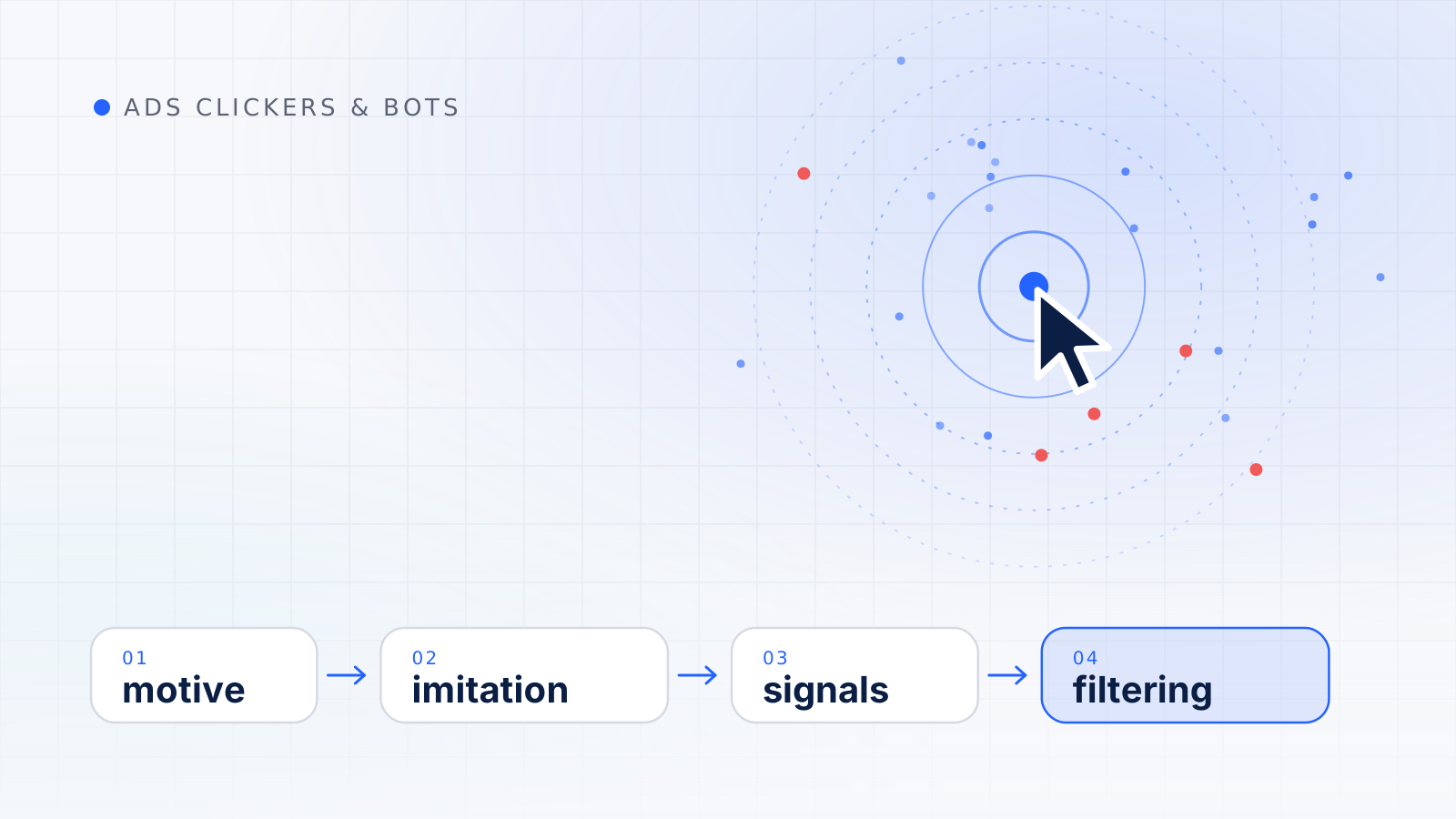
A conceptual guide to click bots: what they try to imitate, the motives behind them, the policy and legal risks, and the signals that expose automated clicking.
Ads clickers
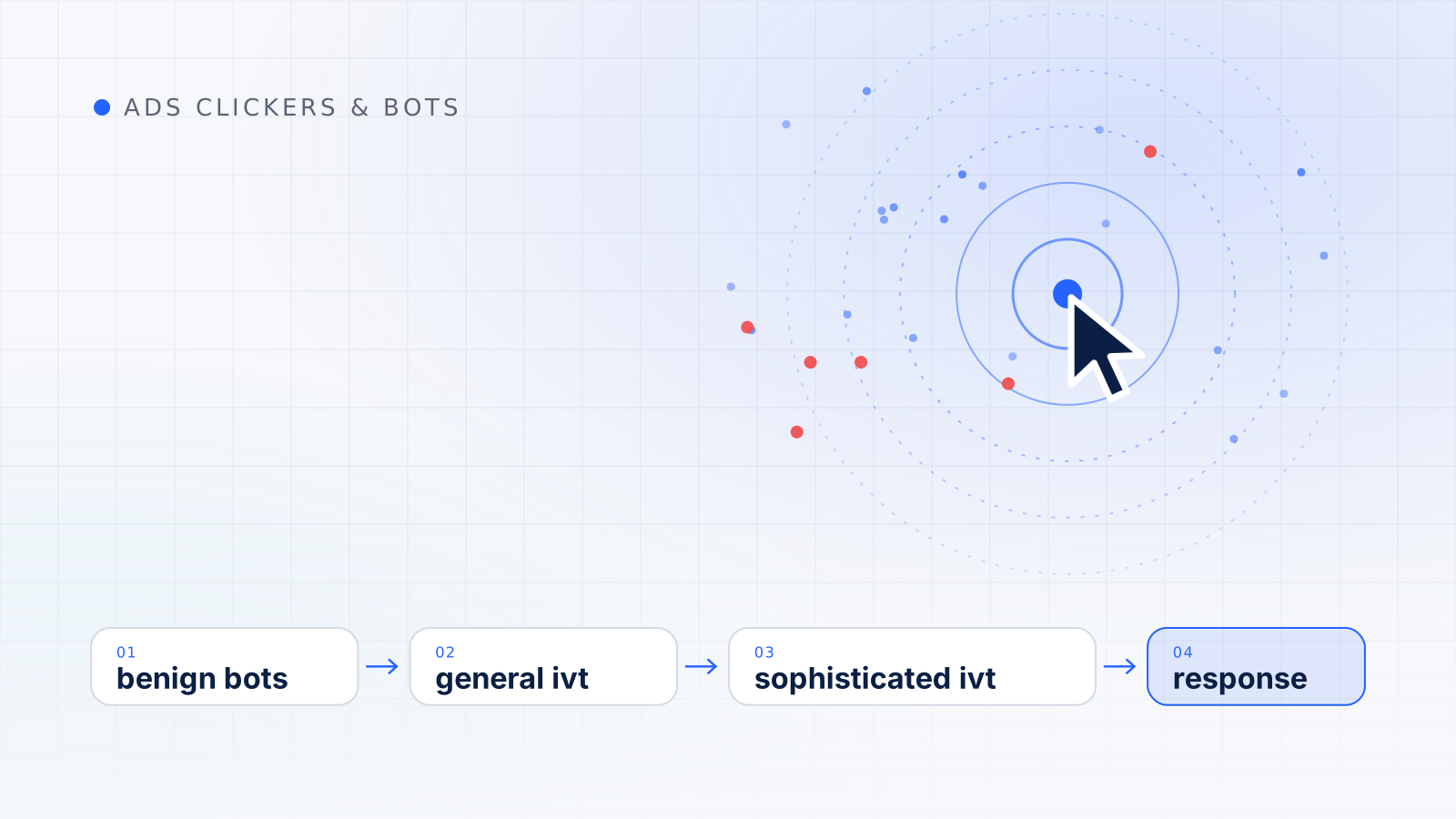
Not every non-human visit is fraud. This taxonomy covers crawlers, prefetching, verification tools and sophisticated invalid traffic, and what each means for advertisers.